|
|
|
Heart Hugger Sternum Support Harness
|
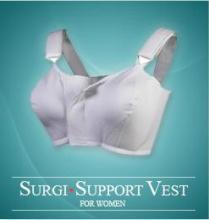
You will be fitted with a Support Harness called Heart Hugger after your breathing tube is removed. This harness has adjustable straps over the shoulders like suspenders and a 4” wide chest belt that encircles your entire ribcage. There are handles in the front that should be adjusted to be one of your hands-width apart. Heart Hugger remains passive until you need support. Anytime you cough, sneeze or move your upper body, you will take the handles on the front of Heart Hugger and squeeze them together, with fingertips only, with one or both hands. Heart Hugger will provide you with uniform encircling support around your entire ribcage and give you the ability to control your pain and support your chest during the first few weeks of your recovery.
|
|
Gastric Tube
|
A small tube is placed from your mouth or nose into your stomach to keep the stomach empty of air and fluid. This helps prevent risk of vomiting. This tube is taken out when the breathing tube is removed. You will then be able to take ice chips and liquids by mouth, and your diet will slowly return to normal. It is quite common to feel very hungry. Eat what you can as long as you are not sick to your stomach.
|
|
Heart Monitor
|
Your heart rate, heart rhythm, blood pressure, and heart pressures are displayed on the bedside screen. These "waveforms" give the heart team vital data about your heart and blood stream. The heart rate and rhythm are obtained through pads placed on the skin. Your blood pressure is obtained through a small tube placed in a blood vessel in your wrist. This tube, or arterial line, is also used to withdraw blood samples so you won't need blood drawn from your veins. The heart pressures are obtained through a small yellow tube placed into a vein of your neck. In most cases, all tubes are removed in 24 to 48 hours.
|
|
Chest Tubes/Pacemaker Wires
|
It is normal to have chest drainage tubes placed during your surgery. The chest tubes allow blood and fluid that form inside our chest to drain out. Usually the tubes are removed the first or second day after surgery. Temporary pacemakers are placed in all patients. They serve as a backup to assist the heart rhythm if needed. The wires will be covered by a bandage and should not get wet. They will be removed within three to four days.
|
|
Intravenous/Bladder Tube
|
Intravenous (IV) lines allow us to give you fluids and medications after surgery. The bladder tube drains urine and allows us to watch your fluid balance and kidney function. This tube remains in place for one or two days, after which you should be able to walk to the bathroom. The nurses need to measure your fluid output, so they will give you a container to collect your urine after the tube is removed. Although you will have a number of tubes and lines after surgery, they are only temporary. Each one is removed as soon as possible, many of them within a day or two. They may seem awkward while in place, but they will cause little or no pain.
|
|
Preparing for Your Surgery
|
Before your surgery can be a busy time-you can expect visits from different members of the cardiothoracic surgery team. Besides your heart surgeon, team members include residents and anesthesiologists. The team also includes nurse practitioners and nursing staff, who are specially trained in treating heart patients. The nurse practitioner will discuss what to expect before and after your heart surgery. He or she will serve as a contact person and coordinate your care. Your nurse practitioner will meet with you on a regular basis during your stay and will help make plans for your discharge home. A respiratory therapist will explain the need for coughing and deep breathing, and will show you how to use a lung exerciser called the incentive spirometer. You need to use this after surgery to keep your lungs clear. The anesthesiologist will see you and explain the type of anesthesia you will be given. Anesthesia will be given right before and throughout the operation, so you are asleep the entire time. The surgical resident will assess you, have you sign a consent form, and answer your questions. Besides visits from team members, lab studies and X-rays will have to be done if they were not done prior to admission. A chest X-ray, electrocardiogram (EKG), blood tests, and a urine test are needed. A blood sample is drawn to identify your blood type and reserve blood in case you need it. We try not to transfuse blood products; however, they are ready if you need them. Twice before surgery, you will shower and scrub the front of your body with a special soap on a sponge and brush that your nurse will give you. Use the sponge side. You should wash your chest first for two to three minutes, then the rest of your body. This soap puts a film on your skin, so do not use other soap after the scrub. Your body hair will be removed the morning of your surgery to make it easier to clean your skin and to lesson the chance of infection.
|
|
About the Heart
|
The heart is a muscular organ about the size of a fist that pumps blood throughout the body. It is made up of four chambers: two upper chambers, called atria; and two lower chambers, called ventricles. There are four valves in the heart which direct blood flow between the chambers and the rest of the body. Just as the body needs oxygen and nutrients to function, so does the heart. It has its own supply of arteries that arise from the aorta (the main artery of the body) and lie on the heart's surface. There are two major blood vessels called the right coronary artery (RCA) and the left main coronary artery (LMCA). These two arteries divide into many branches that supply blood to all portions of the heart.
|
|
Coronary Artery Disease
|
Coronary artery disease is the most common type of heart disease in the country. It occurs when blood flow to the heart is limited due to atherosclerosis or "hardening of the arteries." The disease can begin early in life and may vary in degree from person to person. High blood pressure, smoking, high cholesterol levels and diabetes are major risk factors for the disease. Your family's health history is also a factor. When atherosclerosis occurs, hard, fatty deposits called plaque form inside the walls of blood vessels. The plaque blocks the normal flow of blood which carries oxygen. Lack of oxygen to the heart muscle can lead to chest pain or pressure. This feeling is called angina. Where there is complete blockage of blood in one area, death of the heart muscle, called a "heart attack," can happen.
|
|
Coronary Artery Bypass Surgery
|
Surgeons use bypass surgery to treat severe blockages. Bypass surgery may be done to restore blood flow to the heart muscle, stop chest pain, and reduce the risk of a heart attack. The surgeon must divide the breastbone to expose the heart. To complete the bypass, a segment of a vein in the leg is taken and used to build a detour around the blockage. One end of the vein is sewn into the aorta, and the other end is sewn into the coronary artery below the blockage. The vein can be spared from the leg because there are many others in the area that can perform the same function. In most patients, the surgeon uses the internal mammary artery (IMA) as the bypass graft. There are two IMA's left and right, that lie close to the heart on the back of the breastbone. They can be used alone or along with a vein bypass procedure. The heart muscle should be in a resting state while the bypass grafts are sewn in place. For this reason, a device called the heart/lung machine takes over the function of the heart and lungs during surgery. Once the bypass grafts are sewn into place, the heart/lung machine is no longer needed, the heart and lungs resume function, and the chest is closed. The operation takes about three to five hours, which includes preparation time.
|
|
Heart Valve Surgery
|
Valve problems occur in most cases from birth defects, rheumatic fever, age, infection, and impair the valve’s ability to open and close properly. Stenosis is a valve problem that happens when the valves narrow and the forward flow of blood is decreased. With regurgitation, valves do not close as they should and some blood flows backward instead of forward. When the valves do not open and close as they should, the heart has to work harder to pump blood which can result in trouble breathing, leg swelling, and heart failure. In some cases, medications alone can improve the heart's pumping and relieve the heart failure. Heart surgery is often needed to repair or replace a damaged valve. Heart valves are replaced with either a tissue or mechanical valve. Mechanical valves are very sturdy, so they last longer than tissue valves. A blood thinner called Coumadin will need to be taken for the rest of your life to prevent clots from sticking to the valve. Patients who take blood thinners need frequent lab tests to observe the drug's action. A tissue valve is made from an animal source and molded into a ring. Use of this type of valve does not always require medication to prevent the blood from clotting on the valve. Also, there is no risk of rejection as in transplants because the valve has been pre-treated. In valve repair surgery, the breastbone is divided and the heart/lung machine takes over the work of the heart and lungs until surgery is finished. Your doctor or nurse will be able to describe the kind of valve that will be used for you and answer any questions you have.
|
|
Following Surgery
|
Once you leave your room, your family can wait in the lounge. Your surgeon will speak with your family when your surgery is over. All heart surgery patients are taken to the ICU right after surgery. There, you will be closely observed by a team of heart doctors and nurses who are experts in this kind of care. Once you have been settled and your vital signs are stable, brief visits will be allowed. This can happen about one hour after you arrive in the unit. You may not recall this visit if you are still asleep or groggy. The nurses will give you a visiting schedule. Only immediate family members are allowed to visit and only two people at a time. Once in the unit, you will slowly wake up and become more aware of wires, tubes and lines. Don't be afraid-they help us take care of you. Each is described next so you understand its purpose.
|
|
Going Home
|
Having heart surgery demands special care during your hospital stay and at home. To ease your return home, we have reviewed many topics and concerns that you may be faced with. Before you leave, you will be given the right phone numbers to call with questions or concerns. Remember to keep these numbers handy in case you need them. And finally, remember these last few pointers and things should run smoothly when you return home. Use common sense in planning activities. Listen to your body...if you are tired, rest! Set goals you can reach. Pace yourself according to your own abilities. You are not alone out there; call us if you think we can help.
|
|
Progress After Surgery
|
Most patients remain in the Intensive Care Unit for one to two days. You will usually be allowed to move to a chair with help the day after surgery. When doctors feel you are ready, you will be moved to a telemetry unit. On this unit your heart rhythm will be monitored by a small box-like device that transmits your heart rhythm to a screen. The nursing team will be watching your progress. You will be urged to begin small tasks with help at first. These include coughing and deep breathing, eating, getting out of bed, walking in the hallway, and bathing. During each of these tasks you should be squeezing the handles of your Heart Hugger Sternum Support Harness to support your chest and aid in your comfort. By the third or fourth day after surgery, you should find these tasks much easier. Once you start to become more active, you will probably feel some pain or discomfort around the area of the incision. This pain is due to the spreading of your breastbone, muscles, and ligaments during surgery. As you heal the soreness will gradually go away, but it may take many weeks. You are urged to utilize your Heart Hugger Sternum Support Harness for 4 to 6 weeks after discharge from the hospital. Heart Hugger will give you the support you need in the hospital and at home; helping you speed your own recovery. Let your nurse know if you are having pain and request pain pills when you need them. Throughout your stay, your will get stronger and be able to walk in the hall at least three times a day. The nursing staff's cardiac rehabilitation nurse will be able to help you with your activities. Your nurses will explain in more detail what you can expect after surgery and prepare for your return home. You and your family will be taught things you need to know before discharge. We ask you to save and share with your family any booklets given to you about your care. You can consult with a dietician or social worker if you need to. You will stay on the telemetry unit until you are discharged from the hospital. Plans for discharge are discussed with your surgeon, cardiologist, and other health team members. In most cases, discharge occurs four or five days after surgery. After you are discharged from the hospital, it is important to make an appointment with your family doctor, the cardiologist, and your heart surgeon for follow-up care. But remember, the heart team at McAllen Medical Center is always available to answer any questions you may have in the meantime. Before you leave for home, your nurse practitioner will give you a number to call with any questions or concerns.
|
|
Care of Your Incisions
|
As you heal, your incision will look better and the soreness will go away. Changes in the weather, too much or too little activity, and sleeping in one position too long can cause this soreness. You may also feel numbness or itching, or see redness or swelling, which will also stop with time. To care for your incisions, we suggest: |
| |
 |
Wash gently with mild soap during your daily shower. Dry carefully with a towel. Pat it dry, but do not rub the incision. |
|
|
 |
If you have seri strips (small pieces of white tape) over your incision, you must remove them after you have been home for seven days. If the strips come off on their own, you may leave them off. |
|
|
 |
If your incisions are puffy, have areas of redness, are oozing, or begin to open slightly, call your surgeon. |
|
|
 |
Women should wear a bra. A good support bra will reduce the tension placed on the incision. If the bra bothers you, you may put a small piece of gauze under the bra for added comfort. |
|
|
 |
For discomfort or soreness, you may use a heating pad. Apply it four or five times per day on the low setting for about 20 minutes each time. If needed, take Tylenol or another pain medication prescribed by your doctor. |
|
|
|
Common Symptoms
|
| After heart surgery, many people often have symptoms that will improve with time, such as: |
| |
 |
Clicking or rubbing of the breastbone with movement or breathing. Once you have completely healed (about three months) this often stops. Continuing to use Heart Hugger following surgery should minimize the duration of this effect. |
|
|
 |
Swelling or knot-like lump at the top of your chest incision. This often goes away in six to eight weeks. |
|
|
 |
Aches between your shoulder blades, over the ribs, in the back of the neck, chest or leg incision. This may last for many weeks and lessen with time. |
|
|
 |
Tingling or numbness in your elbow or fingers. This may be due to the way your arm was placed during surgery. |
|
|
 |
Slight swelling in your legs, which lasts four months or more. Keeping your legs up above heart level when sitting and sleeping will help this problem. |
|
|
 |
Weakness and hoarseness in your voice may be present because of the breathing tube that was in place during and after surgery. This improves in a couple of weeks, although it may last longer. |
|
|
 |
Constipation is a common problem and can be controlled with a mild laxative or diet changes. Increasing your daily routine, eating more fresh fruits, vegetables, and other high fiber foods often helps. |
|
|
 |
You may have a difficult time sleeping while you are in the hospital and also at home. Some common reasons are lack of exercise, a decrease in your daily routines, anxiety about surgery or being at home, family matters, depression, and incisional pain or discomfort. Try to decide what may be causing your sleeping problem and talk to your doctor about ways to resolve this. |
|
|
 |
Numbness and soreness on the side of your chest where the internal mammary artery is located. |
|
|
|
Diet
|
You may not have much of an appetite after your surgery, but it will increase as you recover. A balanced diet helps your body heal and lessens fatigue. Each day, eat a wide range of fruits, vegetables, whole grains, breads, meats, and dairy products. Eat less food with a height content of fat, cholesterol, sugar, and salt. If a special diet has been ordered, your nurse and dietician will be able to help you learn these changes. Everyone should be on a heart-healthy diet. Your nurse or dietician will help you learn. We also suggest you follow these guidelines from the American Heart Association: |
| |
 |
Planning menus ahead of time will make it easy to prepare balanced meals. |
|
|
 |
Egg yolks, even eggs you add in cooking, should not exceed three per week. |
|
|
 |
Select low fat or skim milk instead of whole milk. Cheeses made from skim milk are preferred since they are low in fat and high in protein. |
|
|
 |
Eat ice milk, frozen yogurt, tofutti, or sherbet in place of ice cream. |
|
|
 |
Oils and margarine should have no more than two grams of saturated fat per tablespoon, such as canola, olive, corn, safflower, sesame or sunflower oil. Avoid coconut oil, palm oil, or cocoa butter- they are high in saturated fats. |
|
|
 |
Use fish, white meat chicken, and white meat turkey for most of your meat dishes. Use small portions of beef, lamb, veal, and pork. |
|
|
 |
When choosing meats, pick lean cuts. Trim any fat you can see before cooking and avoid deep fat frying. Use cooking methods that help remove fat such as baking, broiling and roasting. Use a rack while cooking so fat will drip off the meat. |
|
|
 |
Limit liver and organ meats to one serving per month. |
|
|
 |
Restrict use of processed meats such as cold cuts, hot dogs, salami, sausage, bacon, and liverwurst. |
|
|
 |
Reduce salt. Avoid foods with high salt content and do not add salt while cooking. To make foods tastier, use basil, chives, lemon, parsley, garlic powder, and marjoram. Check with your doctor before using a salt substitute. |
|
|
 |
Avoid weight gain above your normal weight, as this places added strain on your heart. Eating fewer foods high in sugar and in fat, eating smaller portions, and increasing activity will help you control your weight. |
|
|
|
Smoking
|
Smoking is harmful to your lungs, heart and new grafts. Smoking raises your heart rate and blood pressure, narrows blood vessels, and causes spasms of the heart vessels. Research has shown that new grafts clot much more often in smokers than in non-smokers. If you smoke it is now more important than ever that you stop. Ask family members who smoke to quit with you. If you need more guidance, your cardiac rehab nurse can provide you with information on community groups that can help you quit smoking.
|
|
Drinking
|
Coffee, tea, and sodas have a high caffeine content which is harmful to your heart. Reduce your intake of these liquids to one or two servings a day or switch to the decaffeinated versions. If you sometimes enjoy an alcoholic drink, you may do so after surgery. But, during your recovery your alcohol intake should not exceed two or three ounces per day. You should not drink alcohol if you are taking pain pills, sleeping pills, or tranquilizers. To be sure, ask your doctor or nurse if alcohol will react with any of your pills.
|
|
Medications
|
Most patients need medications while they are healing. Before you are discharged from the hospital, your doctor will prescribe the medications you will take home. Do not take any of the medications you were using before surgery unless you are told to do so by your doctor. Do not increase, decrease, or stop the amount of your medications without your doctor's advice. Once your prescriptions are written, one of your nurses will discuss each medication with you and give you a schedule. Keep your schedule on the refrigerator or another visible place, and bring it with you when you visit your doctor.
|
|
Reasons to Call Your Doctor
|
| If you feel any of these symptoms, report them to your doctor or nurse: |
| |
 |
Palpitations or a heart rate greater than 120 beats per minute when you are at rest, or a change from a regular to an irregular pulse. |
|
|
 |
Increased fatigue or shortness of breath at rest. |
|
|
 |
Temperature above 101 degrees more than one time, or chills for 24 hours. |
|
|
 |
Excessive redness, swelling, soreness, or drainage from any wound site. |
|
|
 |
Swelling in your ankles and hands with a weight gain of two or more pounds in one day or five pounds in one week. |
|
|
 |
Abnormal pain or other symptoms that do not go away with your medication. |
|
|
 |
Pain in the calf of your leg. |
|
|
|
Wound Support, Pain Management, Confidence
|
Heart Hugger is applied in the ICU just before you begin your first respiratory exercises. You will squeeze the handles together when you stand and sit, go to the bathroom, are turned in bed, going for walks and most importantly, during deep breathing exercises with the incentive spirometer (respiratory therapy). After surgery, your lungs need to expand. That is why your respiratory therapy exercises are critical to your recovery. While in surgery the ventilator was breathing for you, causing your lungs to retain the water vapor that is expelled normally when you exhale. This vapor settles in your lungs and is coughed up in the form of phlegm. Each time you cough your lungs press outward against your ribcage and sternum. This can be painful and puts stress on the wires holding your sternum together. Heart Hugger gives you the confidence to be aggressive with your respiratory therapy, providing you with wound support and pain relief, helping to speed your recovery. Simply squeezing the handles together provides uniform encircling support for the whole chest whenever you cough, sneeze or make uncomfortable movements. You will continue using Heart Hugger throughout your hospital stay. Heart Hugger should be readjusted over your street clothes and worn at home continuing to give you the wound support you need for 4-6 weeks.
|
|
Follow-up
|
A report of your operation and your progress will be sent to your family doctor. You should also schedule a visit with your cardiologist and family doctor after you are home.
|
|